

RAISING MONEY-SMART KIDS : Simple Ways to Build Healthy Lifelong Financial Habits
/Financial literacy isn’t always taught in classrooms, yet it’s one of the most valuable life skills our children can develop. As parents, we have everyday opportunities to help our kids build healthy money habits — through conversations, choices, and real-life moments. The earlier they start, the more confident they’ll feel when managing money as adults.
Start Early — Make Saving Rewarding
Kids notice money surprisingly early. If you’ve seen your toddler “buy groceries” in pretend play, you’ve already witnessed those first sparks of financial awareness. A small allowance can help turn that curiosity into good habits.
Instead of linking pocket money solely to chores (which can encourage kids to negotiate every task), consider giving a regular allowance for being responsible and contributing to the household — with extra rewards for optional jobs that take effort and initiative.

This reinforces an important lesson: money is earned, not given, and it needs to be managed wisely.
Talk About Money Openly
Money doesn’t need to be a secret adults-only topic. Children learn by watching; how you shop, how you save, how you make trade-offs, and how you talk about goals.
Use simple day-to-day examples:
Why you’re choosing home-brand cereal instead of a name brand
Why you’re waiting for a sale
Why some purchases have to wait
You can even share age-appropriate mistakes; kids learn a lot from seeing that even adults are still learning.
Show Them How Money Grows
Young children can start with a piggy bank, but as they grow, a bank account gives them hands-on experience.
Help them:
Set a savings goal
Track their progress
Notice the interest they earn
As they get older you may even try to explain the amazing power of compounding interest. You can explain it this way:
“When you put money into a savings account, the bank gives you a little extra money as a “thank you” for saving. That extra money is called interest.
Then something cools happens; next time, the bank gives you interest on your money AND the interest they already paid you before — so your savings keep growing, like planting seeds that grow into trees!”
Understanding this early gives them one of the greatest tools for long-term financial success.
Make Saving Fun and Practical
Try simple systems like the Spend, Save, Share jars:
Spend: for small treats
Save: for bigger goals
Share: for charity or generosity
This builds a balanced, thoughtful relationship with money.
To keep motivation high, set goals together and celebrate milestones; whether it’s saving $5 or reaching a bigger target. Visuals help; sticker charts, progress bars, or even a photo of the item they’re saving for.
Guiding Teens and First Earners
When pocket money becomes a first job, real-world financial responsibility kicks in.
Talk to them about:
Budgeting
Saving part of each pay
Setting goals (short and long-term)
You might encourage good habits by matching part of their savings; a dollar-for-dollar match is incredibly motivating and teaches reward for discipline.
Help them navigate the digital money world: tap-and-go cards, online shopping, in-game purchases and subscriptions. Spending can feel
invisible; awareness early prevents bad habits later.
Lead by Example
You don’t need to be a financial expert or have all the answers. Kids learn most from what they see:
“We’re saving for a holiday, so we’re eating at home more often.”
“Let’s compare prices before we buy.”
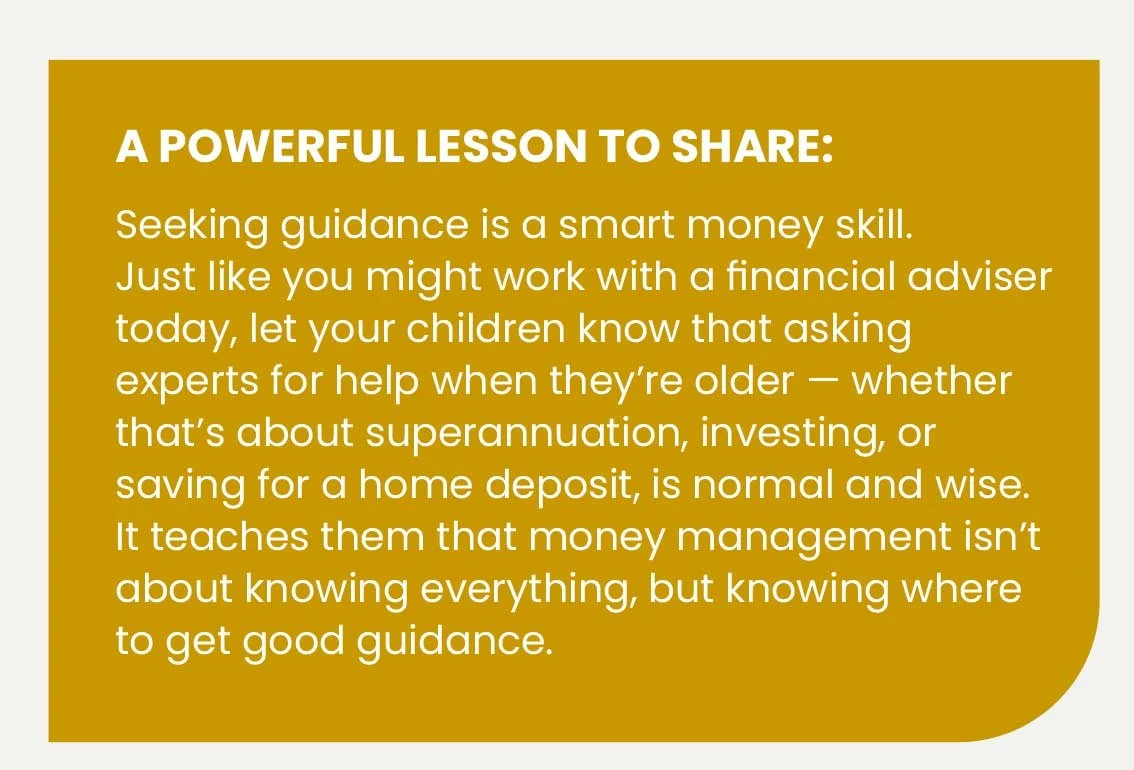
“We spoke with our Financial Adviser about planning ahead.”
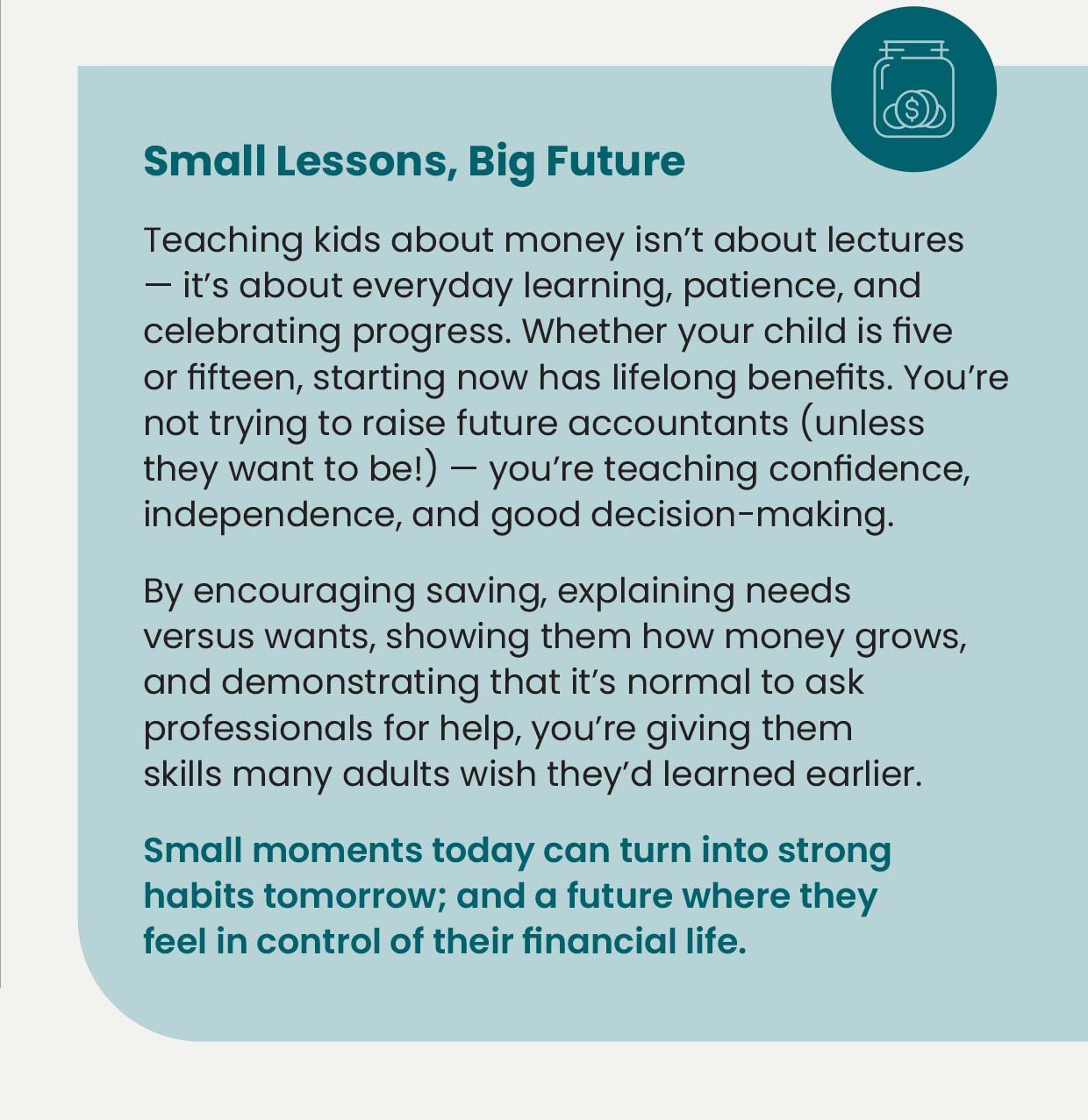
These small comments show planning, patience, and the value of making informed choices — lessons that stick.
